Topic 1 - Biological molecules
1.1 Monomers, polymers and carbohydrates
Monosaccharides: the simplest carbohydrates. Examples: glucose (C6H12O6), fructose, galactose. Both alpha (α) and beta (β) glucose have the same molecular formula but differ in the position of the -OH group on carbon 1.
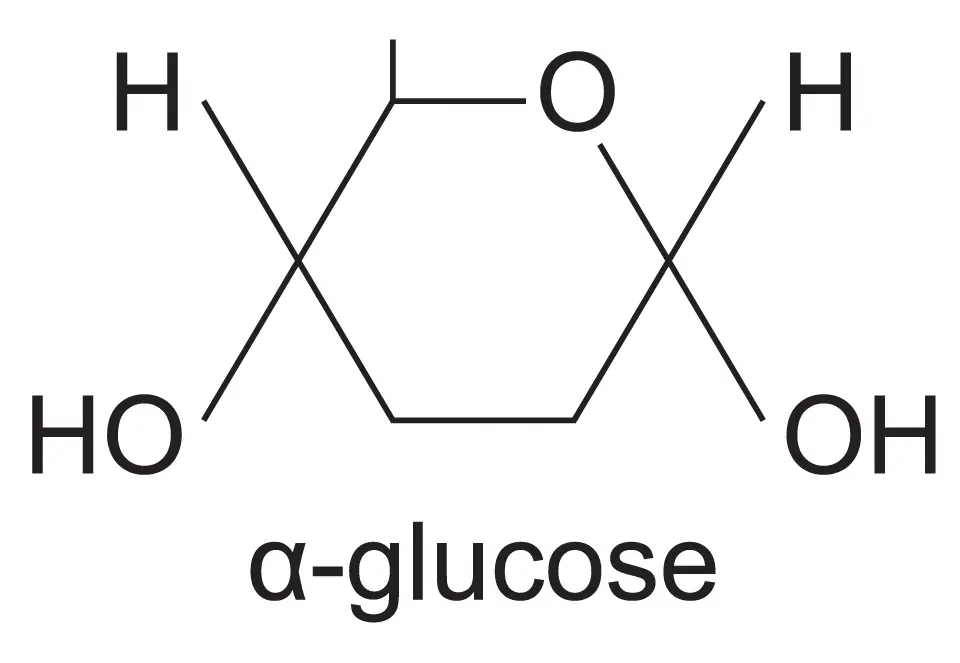
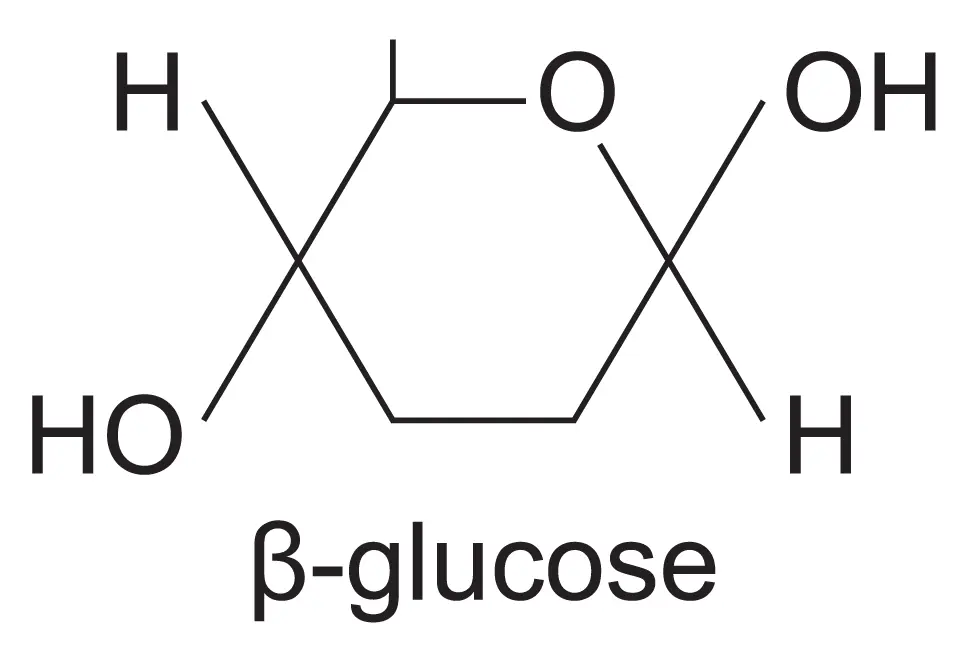
Disaccharides (formed by condensation of two monosaccharides via a glycosidic bond):
Polysaccharides:
| Polysaccharide | Monomer | Bonds | Structure | Function |
|---|---|---|---|---|
| Starch (amylose) | α-glucose | 1,4 only | Unbranched, coiled helix | Energy storage in plants |
| Starch (amylopectin) | α-glucose | 1,4 and 1,6 | Branched | Energy storage in plants |
| Glycogen | α-glucose | 1,4 and 1,6 | Highly branched | Energy storage in animals (liver and muscle) |
| Cellulose | β-glucose | 1,4 only | Straight chains, H-bonds between chains form microfibrils | Structural: plant cell walls |
Tests: Benedict's reagent (reducing sugars: blue to brick-red precipitate on heating). Non-reducing sugars: hydrolyse with HCl first, neutralise, then Benedict's. Iodine solution: starch gives blue-black colour.
Starch and glycogen are suitable as storage molecules because they are insoluble (do not affect osmosis), compact, and can be rapidly hydrolysed to release glucose. Their branched structure provides many free ends for simultaneous enzyme action.
1.2 Lipids
Test for lipids: emulsion test - dissolve sample in ethanol, add to water; a cloudy white emulsion confirms lipid presence.
Per gram, lipids release more than twice the energy of carbohydrates (approximately 39 kJ g-1 vs 17 kJ g-1). They are also lighter per unit energy (no water of hydration), making them ideal for long-term energy storage.
1.3 Proteins and enzymes
Amino acids are the monomers of proteins. Each has an amino group (-NH2), a carboxyl group (-COOH), a hydrogen atom, and a variable R group attached to a central carbon. A peptide bond forms by condensation between the amino group of one amino acid and the carboxyl group of another.
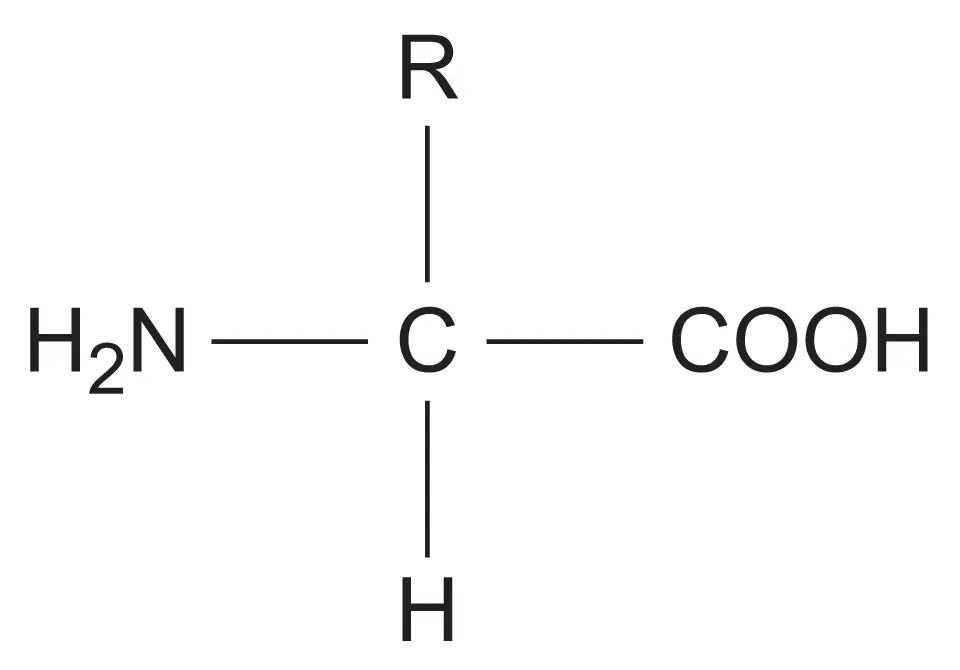
Test for proteins: biuret test - add sodium hydroxide (NaOH) solution, then a few drops of dilute copper(II) sulfate (CuSO4) solution. A purple/violet colour confirms the presence of peptide bonds. Blue = negative result (no protein).
Enzymes are biological catalysts. They lower the activation energy of reactions by forming a temporary enzyme-substrate complex at the active site.
End-product inhibition (feedback inhibition): the final product of a metabolic pathway acts as a non-competitive inhibitor of an earlier enzyme in the pathway. This prevents overproduction and conserves resources. Example: amino acid synthesis pathways.
Factors affecting enzyme activity:
- Temperature: increases rate up to optimum; above optimum the enzyme denatures - permanently changes the shape of the active site
- pH: extreme pH denatures the enzyme; changes ionisation of R groups in the active site
- Substrate concentration: increases rate until all active sites are occupied and all enzymes are saturated
- Enzyme concentration: increases rate if substrate is in excess
Denaturation changes the tertiary structure permanently (breaks hydrogen bonds, ionic bonds, and disulfide bridges); this changes the shape of the active site so the substrate can no longer bind. Denaturation is not the same as the enzyme simply slowing down at low temperatures.
1.4 Nucleic acids and DNA replication
Nucleotides are the monomers of nucleic acids. Each consists of a pentose sugar, a phosphate group, and a nitrogenous base. Nucleotides join by phosphodiester bonds (condensation between the phosphate of one and the sugar of the next).
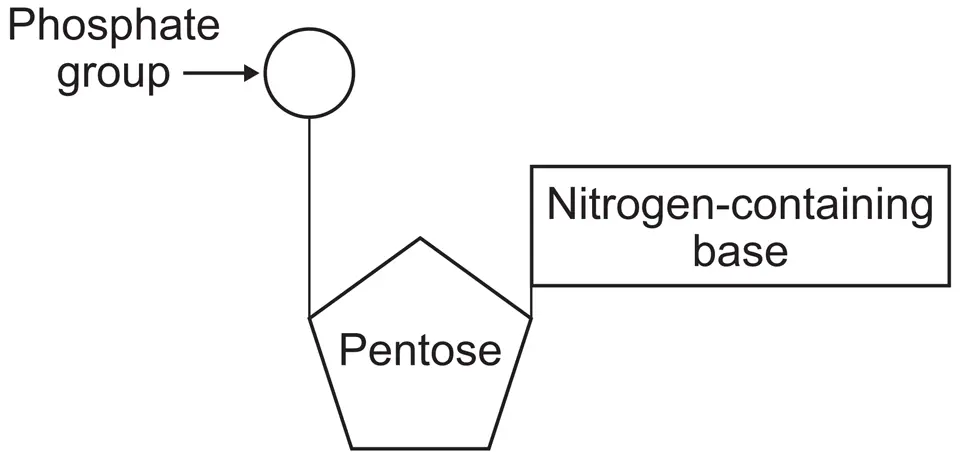
DNA replication is semi-conservative: each new DNA molecule contains one original (parental) strand and one newly synthesised strand.
- DNA helicase breaks the hydrogen bonds between base pairs and unwinds the double helix, creating two template strands
- Free DNA nucleotides are attracted to their complementary base pairs on the template strand (A with T, C with G)
- DNA polymerase catalyses the condensation reaction that joins adjacent nucleotides together, forming the phosphodiester bonds along each new strand
- Two identical double-stranded DNA molecules result, each with one original and one new strand
Semi-conservative replication was confirmed by the Meselson-Stahl experiment using heavy nitrogen (15N) and light nitrogen (14N). After one generation in 14N medium, all DNA had intermediate density (one strand each). After two generations, half was intermediate and half light density.
1.5 ATP, water and inorganic ions
ATP (adenosine triphosphate) consists of adenine + ribose + three phosphate groups. It is the universal energy currency of cells.
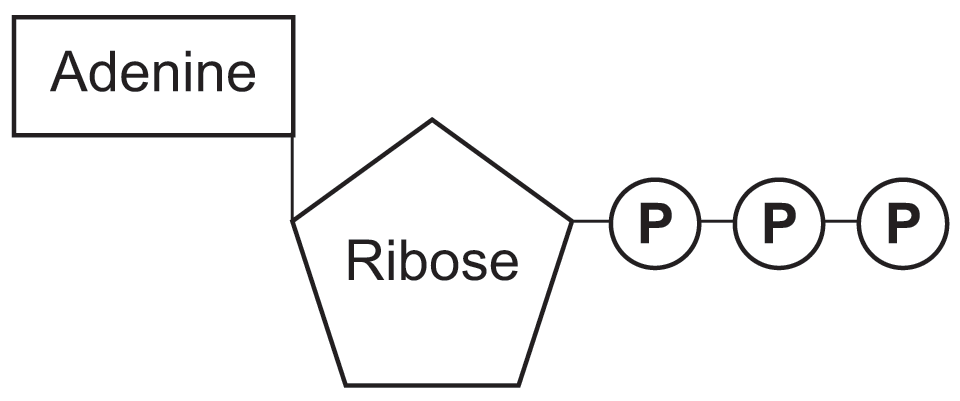
ATP is suitable as an energy currency because: it releases energy in small, manageable amounts; it is soluble and easily transported; it cannot pass out of the cell; it is immediately usable without further digestion. The inorganic phosphate (Pi) released during hydrolysis can phosphorylate other compounds, activating them for metabolic reactions.
Water's biological importance stems from its dipole nature (slightly positive H, slightly negative O), which enables hydrogen bonding between molecules:
Key inorganic ions:
Topic 2 - Cells
2.1 Cell structure: prokaryotes and eukaryotes
| Feature | Prokaryotic cell | Eukaryotic cell |
|---|---|---|
| Size | 1-10 μm | 10-100 μm |
| Nucleus | No membrane-bound nucleus; naked circular DNA in nucleoid region | Membrane-bound nucleus with linear DNA and histones |
| Organelles | No membrane-bound organelles | Membrane-bound organelles (mitochondria, ER, Golgi etc.) |
| Ribosomes | 70S (smaller) | 80S (larger); 70S in mitochondria and chloroplasts |
| Cell wall | Murein (peptidoglycan) | Cellulose (plants), chitin (fungi), absent in animals |
| DNA | Circular, naked (no histones); may have plasmids | Linear, associated with histone proteins |
In addition to plasmids, many prokaryotic cells have a capsule (a protective slime layer around the cell wall) and one or more flagella (for movement).
Key eukaryotic organelles:
In complex multicellular organisms, specialised eukaryotic cells are organised into tissues, tissues into organs, and organs into organ systems.
Microscopy:
Magnification and resolution are different. A blurry photo can be magnified further but the detail does not improve (resolution is limited). Electron microscopes have far greater resolution than light microscopes, allowing sub-cellular structures to be seen clearly.
Viruses are acellular and non-living. They cannot carry out metabolism, grow, or reproduce independently. Structure of a virus particle (virion):
Cell fractionation and ultracentrifugation isolate specific organelles from cells for biochemical study:
- Tissue is homogenised in ice-cold isotonic buffer. Ice-cold: reduces enzyme activity; isotonic: prevents osmotic damage to organelles; buffer: maintains stable pH
- Homogenate is filtered to remove intact cells and large debris
- Filtered solution is centrifuged at progressively increasing speeds. Denser and larger organelles pellet first:
All three conditions (cold, isotonic, buffered) are needed simultaneously. Cell fractionation allowed organelles to be isolated and their biochemical roles confirmed directly - e.g. isolated mitochondria confirmed that aerobic respiration occurs in mitochondria.
2.2 The cell cycle, mitosis and meiosis
The cell cycle has two main phases:
Mitosis produces two genetically identical daughter cells (same chromosome number as parent). Used for growth, repair, and asexual reproduction.
Meiosis produces four genetically non-identical haploid cells. Involves two successive divisions. Used for gamete production. Sources of genetic variation:
- Crossing over: homologous chromosomes exchange segments at chiasmata during prophase I. Creates new combinations of alleles
- Independent assortment: homologous pairs line up randomly at the equator during metaphase I; each combination of chromosomes is possible
Mitosis and meiosis are commonly confused. Key distinctions: mitosis = 2 diploid daughter cells, genetically identical; meiosis = 4 haploid daughter cells, genetically unique. Only meiosis involves crossing over and independent assortment.
Binary fission in prokaryotes (not mitosis - no spindle, no linear chromosomes):
- The circular DNA replicates; any plasmids also replicate
- The cell elongates; the two DNA copies are pulled to opposite ends of the cell
- The cytoplasm divides, producing two daughter cells - each with one copy of the circular DNA and a variable number of plasmid copies
Virus replication: viruses do not divide - they are non-living. After attachment proteins bind to the host cell surface, viral nucleic acid is injected into the host cell. The host cell's own ribosomes and enzymes replicate the viral nucleic acid and synthesise viral proteins. New virions are assembled and released by lysis or budding.
Cancer: mitosis is normally tightly regulated by genes. Mutations in these control genes can cause uncontrolled cell division, producing a tumour. If tumour cells spread to other tissues (metastasis), this is cancer. Many cancer treatments target rapidly dividing cells - e.g. chemotherapy disrupts the cell cycle; radiotherapy damages DNA in tumour cells.
2.3 Transport across cell membranes
The fluid mosaic model describes the cell surface membrane: a phospholipid bilayer (hydrophilic heads face outward, hydrophobic tails face inward) with proteins embedded throughout. Cholesterol stabilises fluidity. Glycoproteins and glycolipids act as cell surface receptors and antigens.
Water potential must be understood carefully: it is always negative or zero. A cell placed in a hypertonic solution (lower water potential than cell) will lose water by osmosis and shrink (crenation in animal cells; plasmolysis in plant cells). A cell in a hypotonic solution gains water (lysis in animal cells; turgid but protected by cell wall in plants).
2.4 Cell recognition and the immune system
Each cell type carries specific molecules on its surface - primarily proteins and glycoproteins - that identify it. The immune system uses these to distinguish self from non-self, identifying: pathogens, cells from other organisms of the same species, abnormal body cells, and toxins.
Phagocytosis:
- Phagocyte is attracted to pathogen by chemical signals (chemotaxis)
- Phagocyte engulfs the pathogen by endocytosis, enclosing it in a phagosome
- Lysosomes fuse with the phagosome and release hydrolytic enzymes (lysozymes) that digest the pathogen
- Antigens from the digested pathogen are displayed on the phagocyte's cell surface - it becomes an antigen-presenting cell (APC)
The cellular response (T lymphocytes):
The humoral response (B lymphocytes):
Antigen-antibody complex and pathogen destruction:
Vaccines and herd immunity: a vaccine contains an antigen (killed/attenuated pathogen, protein subunit, or mRNA) that stimulates a primary immune response and memory cell formation without causing disease. Herd immunity: when a sufficiently high proportion of a population is immune, chains of infection break down and the pathogen cannot spread - protecting unvaccinated individuals (e.g. newborns, immunocompromised) who cannot receive vaccines.
HIV and AIDS:
Why antibiotics are ineffective against viruses: antibiotics target bacterial structures - cell wall synthesis, 70S ribosomes, metabolic enzymes. Viruses have no cell wall, no ribosomes of their own, and no independent metabolism; they use the host cell's machinery. There is no bacterial target for antibiotics to act on.
Monoclonal antibodies are identical antibodies produced by a single clone (hybridoma cell = B lymphocyte fused with a myeloma cancer cell, combining antibody production with immortality). Uses:
ELISA test (enzyme-linked immunosorbent assay): detects the presence or quantity of a specific antigen. Antigen in sample binds to surface - primary antibody (complementary to antigen) is added - secondary antibody (with enzyme attached) binds to primary antibody - substrate is added - the enzyme converts substrate to a coloured product. Colour development confirms presence of antigen; intensity indicates quantity.
Ethical issues: religious/cultural objections to vaccination; rare adverse reactions balanced against population benefit; debate over compulsory vaccination; herd immunity obligations vs individual choice; use of animals in producing monoclonal antibodies; high cost limiting access in lower-income countries; uncertainty about long-term effects of newer technologies (e.g. mRNA vaccines).
Active vs passive: the key difference is memory cells. Active immunity creates them (long-lasting); passive immunity does not (temporary). HIV destroys helper T cells - these coordinate both the cellular and humoral responses, so losing them progressively cripples the entire immune system, leading to AIDS.
Topic 3 - Organisms exchange substances with their environment
3.1 – 3.2 Exchange surfaces and gas exchange
As organisms increase in size, their surface area to volume (SA:V) ratio decreases. Large organisms cannot exchange substances fast enough by diffusion alone and require specialised exchange surfaces with the following features:
- Large surface area to maximise rate of diffusion
- Thin walls (short diffusion distance)
- Moist surface (gases dissolve before diffusing)
- Good blood supply (maintains concentration gradient)
- Ventilation (maintains concentration gradient on air side)
Gas exchange in mammals (alveoli): millions of alveoli provide an enormous total surface area (~70 m2). Walls are one cell thick; surrounded by capillary network. Surfactant reduces surface tension to prevent collapse.
Ventilation: Inhalation - external intercostal muscles and diaphragm contract; thorax volume increases; pressure falls below atmospheric; air moves in. Exhalation - muscles relax; volume decreases; pressure rises; air moves out. (Forced exhalation: internal intercostal muscles contract.)
Pulmonary ventilation rate (PVR):
The counter-current system in fish gills maintains a diffusion gradient along the entire gill surface - blood is always less saturated than the water next to it. A parallel flow system would reach equilibrium halfway, reducing extraction to ~50%. Xerophyte adaptations always involve a compromise: reducing water loss also restricts gas exchange efficiency.
3.3 Digestion and absorption
| Enzyme | Type | Substrate | Product(s) | Location |
|---|---|---|---|---|
| Salivary amylase | Carbohydrase | Starch | Maltose (and dextrins) | Mouth |
| Pancreatic amylase | Carbohydrase | Starch | Maltose (and dextrins) | Small intestine |
| Maltase | Disaccharidase | Maltose | Glucose | Small intestine (brush border) |
| Pepsin | Endopeptidase (cleaves internal peptide bonds) | Proteins | Polypeptides | Stomach (pH 2) |
| Trypsin | Endopeptidase (cleaves internal peptide bonds) | Proteins/polypeptides | Smaller peptides | Small intestine |
| Exopeptidases | Exopeptidase (cleaves terminal amino acids) | Polypeptides | Shorter peptides/amino acids | Small intestine |
| Dipeptidases | Membrane-bound exopeptidase | Dipeptides | Amino acids | Small intestine (brush border) |
| Lipase | Lipase | Triglycerides | Fatty acids + monoglycerides | Small intestine |
Bile (produced by liver, stored in gall bladder) emulsifies fats into smaller droplets, increasing surface area for lipase action. Fatty acids and monoglycerides are incorporated into micelles (with bile salts), which carry them to the epithelial surface where they are released and absorbed.
Absorption in the ileum: villi (and microvilli/brush border on epithelial cells) greatly increase surface area. Glucose and amino acids absorbed by co-transport with Na+ (Na+ enters with glucose via a co-transporter; Na+ pumped back out by Na+/K+ ATPase). Fatty acids and monoglycerides diffuse out of micelles into epithelial cells, are reassembled into triglycerides, packaged into chylomicrons, and enter the lacteals (lymphatic system).
Co-transport relies on the sodium gradient established by active transport of Na+ out of the cell. Glucose therefore enters against its own concentration gradient indirectly, using energy spent maintaining the Na+ gradient.
3.4 Mass transport in animals
Tissue fluid formation: at the arterial end of a capillary, hydrostatic pressure (blood pressure) is high, forcing fluid out. Plasma proteins lower the water potential of the blood, so at the venous end (where hydrostatic pressure has fallen), water moves back into the capillary by osmosis down a water potential gradient. Excess fluid drains into the lymphatic system.
The heart: right side pumps deoxygenated blood to lungs (pulmonary circulation); left side pumps oxygenated blood to body (systemic circulation). The left ventricle has thicker walls (generates higher pressure for systemic circulation).
Named blood vessels: the vena cava returns blood to the heart and the aorta carries blood to the body; the pulmonary artery carries blood to the lungs and the pulmonary vein returns it; the renal artery and renal vein serve the kidneys; the coronary arteries supply the heart muscle itself.
Cardiac cycle: atrial systole (atria contract, blood enters ventricles) → ventricular systole (ventricles contract, blood ejected) → diastole (all chambers relax, heart refills). Atrioventricular valves prevent backflow into atria; semilunar valves prevent backflow from arteries.
Haemoglobin is a quaternary protein with four subunits, each containing a haem group with an Fe2+ ion that binds one O2 molecule (so 4 O2 per haemoglobin). The oxygen dissociation curve is S-shaped (sigmoid) due to cooperative binding (binding of one O2 makes subsequent binding easier).
The sigmoid shape of the oxygen dissociation curve is biologically significant: haemoglobin loads O2 efficiently in the lungs (high pO2, steep part of curve) and unloads efficiently in the tissues (low pO2). The cooperative binding mechanism makes it far more effective than a simple linear relationship would be.
3.5 Mass transport in plants
Transpiration and cohesion-tension theory:
- Water evaporates from mesophyll cells into air spaces and exits through stomata (transpiration)
- Water potential in leaf mesophyll falls; water moves from xylem by osmosis
- Cohesion between water molecules (hydrogen bonds) creates a continuous water column under tension
- Tension is transmitted down the xylem, pulling water up from roots
- Water enters root hair cells by osmosis (lower water potential in root cells than soil solution)
Factors affecting transpiration rate: temperature (increases evaporation); humidity (reduces gradient if high); wind speed (removes water vapour, steepens gradient); light (stomata open); leaf area.
Translocation (mass flow hypothesis): sugars are actively loaded into phloem at the source (e.g. leaf) raising the solute concentration. Water enters phloem by osmosis, increasing hydrostatic pressure. This drives mass flow of solutes towards the sink (e.g. roots, growing regions) where sugars are unloaded.
Evidence for and against the mass flow hypothesis:
Evidence against mass flow: all solutes in phloem sap move at the same speed (consistent with mass flow), but different sugars and amino acids are sometimes found at different concentrations at different points - suggesting selective loading/unloading rather than simple bulk flow. The mechanism of unloading at sinks is also more complex than simple mass flow predicts.
Water movement in xylem is passive (no ATP); translocation in phloem requires ATP (active loading at source). Evidence for mass flow: companion cells have many mitochondria (active loading); metabolic inhibitors stop translocation; phloem sap is under positive pressure (aphid stylet experiments show sap exudes). Xylem carries water up; phloem carries organic solutes in both directions.
Topic 4 - Genetic information, variation and relationships between organisms
4.1 DNA, genes and chromosomes
DNA in eukaryotes is associated with histone proteins. DNA wraps around histones to form nucleosomes, which coil further to form chromatin. The coiling allows the DNA of a human cell (~2 m of DNA) to fit inside a nucleus of ~6 μm diameter.
Eukaryotic nuclear DNA is long, linear, and histone-associated. Organelle DNA (mitochondria, chloroplasts) is short, circular, and not histone-associated - identical in character to prokaryotic DNA. In prokaryotes, DNA is short, circular, and not histone-associated. Non-coding DNA includes introns, repetitive sequences between genes (satellite DNA), and regulatory regions.
4.2 Protein synthesis: transcription and translation
The genetic code is: triplet (3 bases = 1 codon = 1 amino acid); degenerate (multiple codons for most amino acids); non-overlapping; universal (same in almost all organisms).
Transcription (DNA → mRNA):
- RNA polymerase binds to the promoter region of the gene on the DNA
- The double helix unwinds; the template (antisense) strand is exposed
- Free RNA nucleotides pair with the template DNA strand by complementary base pairing (template A → mRNA U; template T → mRNA A; template C → mRNA G; template G → mRNA C); RNA polymerase joins them by phosphodiester bonds
- A primary (pre-mRNA) transcript is produced
- Splicing: introns (non-coding regions) are removed; exons (coding regions) are joined together to form mature mRNA
- mRNA leaves the nucleus via nuclear pores
Translation (mRNA → polypeptide):
- mRNA binds to a ribosome at the start codon (AUG, codes for methionine)
- tRNA with complementary anticodon brings the corresponding amino acid to the ribosome
- Peptide bonds form between adjacent amino acids (condensation); tRNA is released
- The ribosome moves along the mRNA (5' to 3'); continues until a stop codon (UAA, UAG, or UGA) is reached
- The polypeptide is released and folds into its tertiary structure
Types of gene mutation: substitution (one base replaced; may be silent, missense, or nonsense); deletion/insertion (frameshift - alters all codons downstream; usually more severe than substitution). Gene mutations arise spontaneously during DNA replication, and mutagenic agents (e.g. UV light, ionising radiation, some chemicals) increase the rate of mutation.
Chromosome (number) mutations: a change in the number of whole chromosomes can arise spontaneously by chromosome non-disjunction during meiosis, when homologous chromosomes (meiosis I) or sister chromatids (meiosis II) fail to separate, so a gamete gains or loses a chromosome.
A silent mutation does not change the amino acid sequence (due to degeneracy of the genetic code). A nonsense mutation introduces a stop codon, producing a truncated, usually non-functional polypeptide. A missense mutation changes one amino acid, which may or may not affect protein function depending on its location and chemical properties.
4.3 Genetic diversity, selection and evolution
Genetic diversity is the range of alleles present in a population. It is the raw material for natural selection.
Natural selection results in species that are better adapted to their environment. These adaptations may be anatomical (physical structures), physiological (internal processes), or behavioural (responses and actions).
Genetic diversity is reduced by inbreeding (increases homozygosity), genetic bottlenecks, and the founder effect. It is maintained by mutation, sexual reproduction, and migration (gene flow). Low genetic diversity makes a population more vulnerable to new diseases or environmental changes.
4.4 Species, taxonomy and biodiversity
The biological species concept: two organisms belong to the same species if they can interbreed to produce fertile offspring. Organisms are reproductively isolated from other groups.
Taxonomy is the classification of organisms into a hierarchy of groups based on shared characteristics:
Binomial nomenclature: each species has a two-part Latin name: Genus (capitalised) + species (lower case). Written in italics or underlined.
Phylogenetics classifies organisms based on evolutionary relationships rather than shared physical characteristics. DNA base sequence comparisons, mRNA base sequences, and amino acid sequences in proteins provide molecular evidence for evolutionary relationships. More similarities = more recent common ancestor.
Biodiversity includes species, genetic, and ecosystem diversity. Measuring biodiversity:
Species richness (number of species) alone ignores evenness (relative abundance). An area with 10 species of equal abundance is more diverse than one dominated by a single species.
Farming and biodiversity: intensive farming practices reduce biodiversity through: monocultures (single crop species eliminates habitat diversity); use of herbicides and pesticides (kill non-crop species and insects); removal of hedgerows (destroys habitat and wildlife corridors); drainage of wetlands; use of inorganic fertilisers (causes eutrophication). The balance between productive farming and conservation is an ongoing tension - nature reserves, hedgerow protection, and wildlife corridors are conservation measures.
Investigating genetic diversity can be done by comparing:
- The frequency of measurable or observable characteristics within/between species
- The base sequence of DNA
- The base sequence of mRNA
- The amino acid sequence of proteins encoded by DNA/mRNA
Gene technology has shifted investigations from inferring DNA differences from observable characteristics to direct sequencing of DNA - more accurate and can reveal relationships not apparent from morphology. Quantitative investigations of variation involve: collecting data from random samples; calculating the mean and standard deviation of measurements. A larger standard deviation indicates greater variation within the sample.
DNA evidence has revised many traditional taxonomic classifications. Organisms that look similar may be only distantly related (convergent evolution) while organisms with different appearances may be closely related. Molecular evidence - DNA base sequences, mRNA sequences, amino acid sequences - is now considered more reliable than morphology alone for determining evolutionary relationships.